ADHD
USD ADHD onwards
Test ADHD
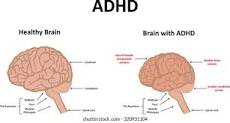
ADHD or Attention Deficit Hyperactivity Disorder is a neurodevelopmental disorder. It reduces your attention span, self-control, and the ability to sit still. It is often first diagnosed in childhood and lasts well into your adult life.
Children with ADHD will be impulsive. They will have trouble in their school and home life. It is more common in boys than in girls.
Adults will have problems organizing things, setting goals, and managing their time. Some of them may have problems with their self-esteem.
There is no complete cure for this. However, some treatments can manage it better.
ADHD Causes and risk factors
The exact cause of ADHD is still not known to us. Some studies show that it may be an inherited disorder. It may also occur due to problems in your central nervous system.
Some of the risk factors include:
Premature birth
Exposure to environmental toxins such as lead
Blood relatives with ADHD or another mental health disorder
Smoking or drinking during pregnancy
Types of ADHD
The three subtypes are
Inattentive type - Here, the main issue is the lack of attention. Girls are more prone to this type.
Hyperactive type - In this type, the child will be impulsive and hyperactive. It is more common with boys than in girls.
Combined type, which is a mix of both types.
Symptoms of ADHD
The signs of ADHD are different for the different types of ADHD.
Inattentive type:
Have trouble staying focused
Makes silly and careless mistakes at school and home
They appear not to listen, even when you are speaking to them directly.
Have trouble following instructions
Have difficulty following through on instructions
Misplace or lose items frequently.
Forget to do their daily chores
Tends to daydream
Gets distracted easily
Hyperactive type:
Cannot remain seated for a long time like in classrooms
Talk too much
Always in constant motion
Blurt out answers
Having difficulty waiting for their turn
Has trouble playing quietly
Running, jumping around
Most of these signs above for both types are common in healthy children also. It is natural for a child to have a short attention span. They will also be very energetic. So, please check with your doctor before you classify them as having ADHD.
ADHD Diagnosis
There is no single test or step to diagnosing ADHD. The doctor may use many methods including
A medical exam - This is to rule out any other causes of your symptoms
Interviews and information gathering - Your doctor will ask for any other medical issues and will ask the parents/teachers questions regarding the condition of the child
Ayurveda and ADHD
Ayurveda is one of the oldest, if not the oldest, medical system in the world. It is, without a doubt, the oldest one, which is still in practice.
One of the main reason for its fame is that it addresses your body, mind, and soul.
As per Ayurveda, we all have three basic energy forces - Vata, Pitta, and Kapha. Each of us has a primary dosha type, which defines our nature and health. If at all there is an imbalance in these doshas, it manifests as diseases.
ADHD is mainly a Vata disorder. It means that there is a Vata imbalance.
Vata dosha has elements of air and space, which gives it the qualities of being dry, light, rough, and cold. This dosha controls all the circulation and air movement in our body. It also controls our thinking process, speech, movements, etc.
Vata dosha can easily get disturbed, and then it also affects Pitta and Kapha doshas. Improper food items or contact with toxic substances create toxins or Ama in your body.
Ayurveda texts have details about our mental abilities and issues as well. As per that, there are three normal functions of the mind. These are
Dhi - the power of learning
Dhriti- the power of retention
Smriti- the power of recall
We will have problems with learning if these three are not in balance.
The vitiated Vata, along with Ama, creates an imbalance in these learning functions. It leads to learning and behavioral issues.
Ayurvedic treatment for ADHD
The main objectives of the treatment are to
Correct the Vata imbalance
Rejuvenate the nervous system
Improve the digestion process
The treatment methods include
Abyanga, a medicated oil massage which helps in correcting the Vata issues.
Snehapaana – Intake of medicated oil or Ghee.
Panchakarma Therapy – To cleanse the body of toxic materials.
These will have to be carried out carefully, strictly under the supervision of an Ayurvedic physician, since many patients can be small children.
Shirodhara- pouring of medicated oil over the forehead. It helps in calming the nerves and relaxing your mind.
You will need to be in the hospital for around 21-28 days for the treatment.
The treatments help to manage the symptoms and correct the etiological factors. Early treatments give better results. The patient will have to continue with medication for a long period. At times therapies are required to be repeated.
Other treatments for ADHD
While there is no cure, there are treatments that can manage the symptoms.
There are medicines that your child can take that will boost and balance levels of brain chemicals. Children with ADHD also benefit from talk therapy.
Complications due to ADHD
Children with ADHD may have several other issues. These include:
Trouble in school and classrooms which can lead to academic failure
Children will tend to have low self-esteem
They will be more prone to have accidents and injuries than other kids
They are at an increased risk of substance abuse like drugs and alcohol
Some may show anti-social behavior such as stealing, fighting, and destroying property
Learning issues like difficulty in reading, writing and remembering
Depression, bipolar disorder and obsessive-compulsive disorder (OCD)
Preventing ADHD
There is no way to prevent ADHD. But, there are some things you can do to reduce your child’s risk of ADHD. These steps include
Keep your child away from pollutants and toxins - Try to make sure that your child does not have exposure to toxins like lead
Mother should stay away from alcohol and cigarettes during the pregnancy time
Give a healthy and balanced diet to your child
Develop attention skills of your child with puzzles and block games
Listen to your child
Engage them in dance, music, arts, etc.
Limit their time with phones, TV, and video games