MEDICAL TRAVEL COST
Keratoconus
USD 800 onwards
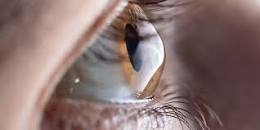
Keratoconus is an eye condition in which your cornea thins and bulges outwards. Normally, your cornea is a clear, dome-shaped surface of your eye. In the case of keratoconus, the structure of your cornea is not strong enough to hold its shape, and the cornea becomes more cone-shaped.
This condition can affect one or both of your eyes. The effect on the two eyes may be different. Keratoconus usually develops during your teens and young adulthood. It will then progress over the next few decades.
It is a slow and progressive disease. Due to this condition, your vision becomes distorted and blurry. It will make daily tasks, such as reading or driving difficult to do.
What causes keratoconus?
There are fibers present in your eye that help hold the cornea in place and prevent it from changing its shape. These are collagens. When they become weak, the cornea loses its shape and starts to bulge outward. The main reason the collagens become weak is the decrease in protective antioxidants in your eye. If your antioxidant levels are low, the collagen weakens, and your cornea starts to bulge outward. Any injuries or damages to your cornea can be another reason.
Keratoconus can affect your vision in two ways. These are:
As your cornea changes shape, the smooth surface becomes distorted. This condition is astigmatism.
When the front of your cornea starts expanding, your vision becomes more near-sighted. Things that are at a distance will appear blurry and distorted.
Risk factors of keratoconus
There are some factors that will increase your risk. These are
Family history - Keratoconus runs in families. You are more likely to develop it if you have a family member who has this or any other eye disorder.
Eye rubbing - Chronic eye rubbing can lead to this disease. It can also worsen the condition.
Chronic eye inflammation - It can destroy your corneal tissues.
Certain disorders - If you have any conditions such as Down's syndrome, hay fever, asthma, or retinitis pigmentosa, you are more at risk.
Age - This condition usually starts in your teens.
Symptoms of keratoconus
Some people may not notice their cornea changing shape, while other people will have clear signs. It can vary from person to person. The common signs include:
Difficulty seeing in the night
Blurred or distorted vision
Distorted vision
Eye irritation
Headaches
Glare and halos around lights
Sensitivity to bright lights
Worsening or clouding vision
Myopia
Double vision when looking with just one eye
Diagnosis of keratoconus
Your doctor will check your medical history and ask for eye tests. The standard tests include:
Keratometry- It is an eye test in which your doctor focuses a circle of light on your cornea. The reflection is then measured. It helps to determine the shape of your cornea.
Eye refraction tests
Slit-lamp examination - In this test, your doctor will direct a vertical beam of light on your eye's surface. It helps your doctor to assess the shape of your eye.
Computerized corneal mapping - There are special tests that will record images of your cornea. It will create a detailed shape of your cornea's surface. These tests will help your doctor to get an idea about the shape of your cornea. It is the most accurate way of diagnosing this condition at its early stage.
Retinoscopy - This includes focusing light beams on your retina and observing the reflection as the light beam moves back and forth.
Ayurvedic treatment for keratoconus
Old classical treatment systems are becoming more popular these days. A key reason for that is the use of chemicals in modern medicine and the side effects that it has on our human body.
Ayurveda is one such old system that is very popular around the world now. It is in existence for more than 3000 years in India. The strong base it has on natural medicine, nonsurgical treatment, and the stress on treating the person are the main reasons for its fame.
Ayurveda views that Vata, Pitta, and Kapha are the three doshas or energy forces that drive all of us. It further states that these doshas need to be in balance. Vata dosha governs the circulation and movement within our body. It is also the force behind our nervous system and the nerves.
Keratoconus is a Vata disorder in Ayurveda. Cornea, the protective outer layer of the eye, has a dense population of nerves with no blood vessels. It is one of the parts of the body which is greatly impacted by Vata dosha.
The main methods in the Ayurvedic treatment for keratoconus include
Snehapanam – Using medicated ghee internally.
Nasyam – Use of drops of medicine through the nose.
Tharpanam – Keeping ghee or medicated oil over the eye for some time.
Putapakam – Is a special treatment. The drug used in Putapaka is in aqueous solution form and has higher active component concentration.
In addition to this, there will be general Panchakarma treatments. You will need to be in the hospital for 18-25 days. Ayurveda treatments differ from person to person. So, your doctor will need to see you first before deciding on the actual plan.
In many cases, with the Ayurveda treatment, the present status of the vision is maintained. In some cases, it has even improved. The patient has to continue the medication even after the in-house treatment.
Other treatments for keratoconus
The treatment varies for each individual. It will depend on the severity of the condition and how fast it is progressing.
In the early stages, using eyeglasses or contact lenses may be enough. For a lot of the patients, the cornea becomes stable after a few years. Such patients will not require further treatment.
But, in some severe cases, the cornea becomes scarred. You will need surgery in such cases. The surgical options include corneal transplant and corneal inserts